Blog 10 of 14
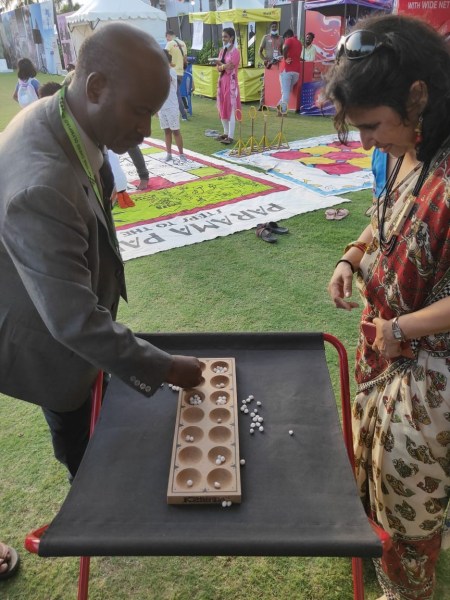
The game of pallanguzhi is a fascinating game of distribution. It is known by so many names across India including Vamanaguntalu, Olinda Kaluja, Aliguli Mane, Adu-guni Mane, Chenne Mane, Saat Kooti, Kutki-Boia and many many others.
Interestingly the game is most popular in Africa where it goes by numerous names including Mancala and even today many coffee shops in many countries of Africa carry boards where locals play as they sip coffee. In this version it has gained popularity, but the rules and modes of play are India. Vary in different countries.
How could the same games be played in different continents? One may never know. However, in an old roman temple in Palmyra in Syria we actually found a board inscribed on the floor. Palmyra was an important stop on the silk route – a trade route between east and west in the 3rd century. One could well imagine the game being played among traders and spread along the trade routes.
Reminiscent of the sowing of seeds, this game has been played traditionally using seeds, shells or stones on a series of depressions made on the ground by the heel of the palm. However, wooden boards of great intricacy and workmanship are also found side by side.
There are a number of games played on this board, each with varying rules. The essence of the game stays the same – the players drop the game pieces in the pits according to the rules and collect treasure based on the outcome of that distribution.
The rules vary from the simple to the complex, encouraging players to be quick witted and to mentally calculate the odds of scoring a big win. The mathematical ability to ensure the game is played successfully is remarkable.
The handling of seeds or shells or stones are reminiscent of Greek worry beads – which are manipulated by hand and are believed to have a calming effect. Additionally, the manipulation of the pieces by the fingers helps exercise them keeping them from growing arthritic and stiff.
During the 44th Chess Olympiad it was wonderful to see players from different countries including Congo, Mozambique, Niger, Kenya, Uganda, Cape Verde and Bhutan recognise the game from their own countries and share the rules with us. This ability to bring people together over a game and through that learn to understand their culture and traditions is a wonderful step in creating bonds of friendship.

 Ripples Of Life and Time