My grandmother was an incredible human being. She loved to cook, she loved to experiment. She was a traditionalist and a modernist. She loved fun and laughter and play, and yet, she had value systems that were traditional and anchored. She barely left the house except for a couple of family visits or a visit to a temple or a wedding, but she was a strong believer in women’s equality.
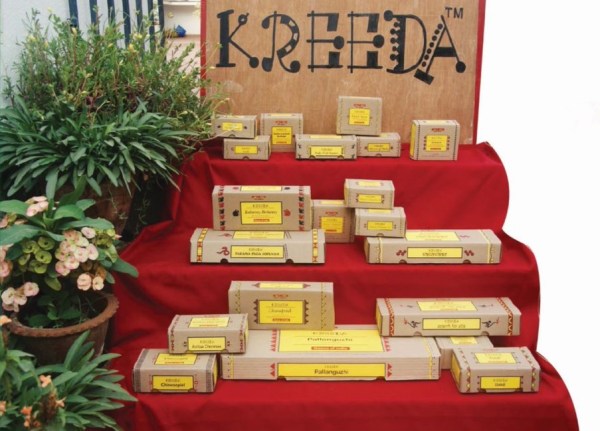
When asked, she would shrug her shoulders and say – he had his job and I had mine and they were both equally important. It was this ability of hers, this spirit that merged the traditional and the modern, the fun and the serious, that I like to think has infused itself in the beautiful games we have created in Kreeda. Indian in Spirit. Global in thinking and quality and approach.
But far beyond being just an inspiration to me, it was my grandmother who was babysitting my children when I went to work. It was she who started teaching them many of the fabulous traditional games that she herself had played as a child.
When I first bundled the children off to be with her, I felt a pang of guilt. After all, it was their great grandmother, an 80-year age gap. They would probably be bored I thought, but far from it.
Akka did two things that they loved. First, she cooked incredibly wonderful food made in copious quantities that satisfied their grubby fingers and their hungry bellies. They loved to eat, and she made everything they wanted. She spoilt them. I guess most grandmothers do, and she was a great grandmother!
Second, she always had time to play. Not for her the tired excuses of a mother – “Oh, God. I just sat down,” or “Can’t you do something on your own for some time?” She was available whenever they wanted – grandma on demand. What could be better than that in the minds of the children? And so, they loved to go there leaving me happy to go out, meet friends and work whenever I wanted, for I had a willing babysitter and happy children.
My curiosity got the better of me one day and when I asked them what they did, they narrated stories of the games they played. Pallanguzhi, Paramapadam, Dhayakattam, Tamarind Seed Game, many of these rolled off their tongues with ease. I was surprised. I had sent them a couple of game boards like Carrom, a modern Snakes and Ladder and Ludo, and I had assumed that that’s what they were playing.
I didn’t realize that she was exposing them to a whole different aspect of Indian culture. I was vaguely familiar with these games. I remembered them in my fuzzy memories of childhood – of the family grouped around a board of Dhayakattam and the brass dice ringing on the floor or an exciting game of Pallanguzhi accompanied by the excited screams and yells of my aunts and grandmother. It had never even occurred to me to bring these to the children. And she did.
The journalist in me was curious and I started talking to people to understand more and more about these games. I started asking questions and I was mesmerized. There was something so charming, so elemental, so exciting about these games that they fascinated me. I just had to know more – more conversations led to more knowledge of these games and more games, which my grandmother admitted were slowly fading from the cobwebs of her mind. I saw the fun that the children had, and I believed that it was something I should bring to the world, to other children like them; and thus, was born the idea of Kreeda.
But it all started with an incredible woman, more than 90 years old, with a sense of fun – in India and its cultural traditions. A woman who is influenced the family so much, that every family gathering dissolves in fun, laughter, music, dancing and more. A woman who has left a legacy in every game of Kreeda, and every person who has played it, enjoyed it, and been influenced by it.
So where do I begin? I begin with my grandmother – Akka.

 Ripples Of Life and Time