
We sometimes need someone to state the obvious. It could be staring us in our face, and it won’t strike us till somebody tells us.
I’m reminded again of one of my grandmother’s iconic stories:
There was an absent-minded fly buzzing around one day. Now in the Tamil language, a fly is called “Eeee.” Now this absent-minded fly had forgotten that it was called. He was in a flap because of this lapse in memory and decided to ask everyone he knew.
First, he went up to a plump little goat and said, “Plump little goat, plump little goat! Can you tell me my name?”
“I don’t know,” said the goat. “Why don’t you ask my mother?”
The fly went to the goat’s mother and said, “Mother of the plump little goat, mother of the plump little goat! Can you tell me my name?”
“I don’t know, but why don’t you ask the goatherd?” said the mother.
So, the fly went to the goatherd and said, “Goatherd of the mother of the plump little goat! Can you tell me my name?”
The goatherd shook his head and said, “No, why don’t you ask my stick?”
At this point we have to believe that inanimate objects can talk. We already believe that animals can talk like us. If we continue to believe they cannot talk, half the stories we know, would never have been!
So, the fly went to the stick and said, “Stick of the goatherd of the mother of the plump little goat! Can you tell me my name?”
The stick replied, “Why don’t you ask the tree from which I came?”
So, the little fly went up to the tree and said, “Tree from which fell the stick of the goatherd of the mother of the plump little goat! Can you tell me my name?”
The tree replied, “I don’t know, but why don’t you ask the bird that sits in the tree?
So, the fly went to the bird and said, “Bird that sits in the tree from which fell the stick of the goatherd of the mother of the plumb little goat! Can you tell me my name?”
“No,” said the bird. “But why don’t you ask the fish that I eat?
So, the fly went to the fish and said, “Fish that are eaten by the bird that sits in the tree from which fell the stick used by the goatherd of the mother of the plump little goat! Can you tell me my name?”
“No,” said the fish. “But why don’t you ask for water in the pond where I swim?
So, the fly went to the pond and said, “Water, in which swims the fish, eaten by the bird that sits in the tree from which fell the stick of the goatherd of the mother of the plump the goat! Can you tell me my name?”
“No,” said the water. “Why don’t you ask the donkey that drinks the water.”
Now the goat went to the donkey and said, “Donkey that drinks the water in the pond where swim the fish that are eaten by the bird that sit in the tree from which fell the stick that is used by the goatherd of the mother of the plump little goat! Can you tell me my name?
“The donkey lifted his head to say “Hee Haw,” but even as he said the word “Hee,” the fly recognised the sound and remembered his name was “Eeee” and flew away happily.
As I said, someone had to state the obvious. It was getting clearer and clearer to me that there was so much to learn from games beyond just playing them. There were things to learn for children – motor skills, sensory skills, hand eye coordination, counting and numbers.
There were things to learn for all of us – life lessons in traditional games. Many of the events we had done were building up to this. I had seen its impact in so many ways, but I still needed just one little more push. I still need a donkey to state the obvious and the donkey, in this case (no disrespect at all) it happened to be my father.
At a vigorous and energetic 85, having worked at the most senior level in numerous organizations in the world, he was fascinated by what I was doing with the. One day when I was sitting with him and talking to him about it and he came up with this idea, of possibly writing a book on the learnings from each game. Let’s generalize what we can learn from each game, he said. It seemed fantastic to me still.
But we talked and we talked, and we talked, and it took me a little time, but I got there and finally realized what a wealth of information was buried in these games. And all we had to do was Just Play!
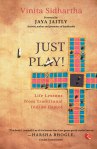
My book was published by Rupa last year – Just Play – Life Lessons from Traditional Indian Games. It was the culmination of many of the things that have happened over the years, many of the lessons I’ve learned in Kreeda for it was not merely providing games for other people but playing them myself, learning for them myself, learning the lessons inherent in them.
Very often through the ups and downs of life I have, in my own way, drawn from lessons in these traditional games. And so, I tell everyone to Just Play! Perhaps I needed to state the obvious. Perhaps I am the donkey in the story!
Contact Kreeda at info@kreedagames.com or call 98417748309 to get your copy of the book!

 Ripples Of Life and Time